
The Perfect Storm — How Scotland's Climate Shapes Whisky
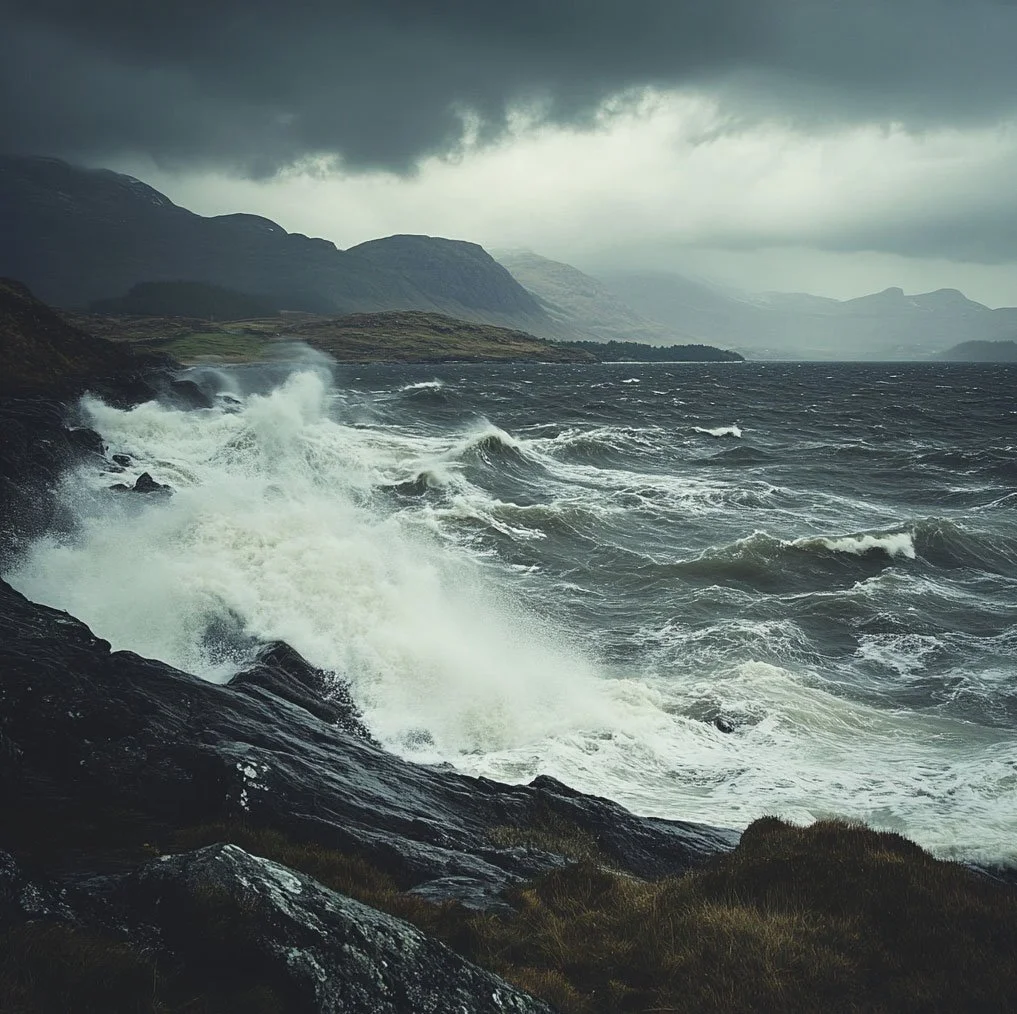
Highlands, Scotland
Wild landscapes. Changing seasons. Centuries of tradition. Discover why the Scottish Highlands have become one of the world's most celebrated regions for Single Malt Scotch Whisky.
There is something extraordinary about the Scottish Highlands. A landscape of ancient mountains, deep glens, mist-covered lochs and endless skies, where the weather can change in a matter of minutes.
Here, nature has always been part of the story.
Atlantic winds sweep across rugged hillsides. Rain clouds gather above the mountains, feeding rivers and streams that have flowed through the landscape for generations. Cool mornings give way to fleeting sunshine, while the seasons move between gentle summers and long, atmospheric winters.
It is a remarkable environment for a remarkable tradition.
For centuries, the Scottish Highlands have been home to some of the world's most respected whisky distilleries. And while exceptional Scotch whisky is ultimately shaped by the skill of its makers, the surrounding climate, water sources and maturation conditions all contribute to the production process.
At Glen Loch®, we celebrate this relationship between nature, time and craftsmanship.
Why Is Scotland's Climate Ideal for Whisky Production?
Scotland's temperate maritime climate is one of the defining characteristics of its whisky-producing environment.
Influenced by the Atlantic Ocean, much of the country experiences relatively cool summers, mild winters and rainfall throughout the year.
In the Highlands, conditions vary considerably between coastal areas, sheltered glens and mountainous regions. Yet the generally moderate temperatures provide an environment in which whisky can mature gradually in oak casks.
Unlike regions with extreme seasonal heat, Scotland typically experiences smaller temperature fluctuations.
This can contribute to a comparatively measured interaction between the spirit and the wood, allowing whisky to develop over many years.
However, the climate is only one part of the equation. The quality of the original spirit, the selection of oak casks and the conditions inside the maturation warehouse are equally important.
Great whisky is never the result of weather alone.
It is the result of nature working alongside experience, patience and precision.
Rainfall and Water — The Lifeblood of Scotch Whisky
Water is essential to Scotch whisky production.
From the preparation of malted barley and the mashing process to fermentation and the adjustment of bottling strength, water plays several important roles in the distillery.
The Scottish Highlands are home to a diverse network of rivers, burns, springs and natural water sources, replenished by regular rainfall.
These water sources have historically influenced where distilleries were established, providing the reliable supply needed for production.
Water chemistry varies according to local geology and source. Some waters contain relatively few dissolved minerals, while others have different mineral compositions that can affect aspects of the production process.
Yet the character of a whisky cannot simply be attributed to the purity or mineral content of its water.
Fermentation, distillation, cask selection and maturation have a far more complex influence on the finished spirit.
Still, the availability of dependable water remains one of the reasons whisky-making traditions have flourished throughout Scotland.
The Highland Seasons — Nature's Slow Rhythm
Whisky maturation is a process measured in years, not days.
Once the new-make spirit is filled into an oak cask, a gradual transformation begins.
Throughout the seasons, changes in temperature and humidity can influence how the whisky interacts with the wood and how much liquid is lost through evaporation.
During warmer periods, the spirit and the cask respond to rising temperatures, influencing the movement and extraction of compounds from the oak.
As temperatures fall, the conditions within the warehouse change again.
These seasonal variations contribute to the complex environment in which whisky matures.
Over time, the spirit can develop greater integration, with oak-derived flavours such as vanilla, caramel and spice complementing the original character of the distillate.
No two casks develop in exactly the same way.
Their position in the warehouse, the characteristics of the oak and the conditions surrounding them all influence the journey from new-make spirit to mature Scotch whisky.
The Angel's Share — What Nature Takes Away
One of the most fascinating aspects of Scotch whisky maturation is the gradual loss of liquid from the cask.
Known as the Angel's Share, this natural evaporation occurs as whisky matures in oak.
Both alcohol and water can pass through the wood over time, with the rate and composition of evaporation influenced by temperature, humidity, airflow and warehouse conditions.
In Scotland, the Angel's Share is often described as averaging around 2% annually, although actual losses vary between casks and maturation environments.
Over many years, this seemingly modest loss can become significant.
A whisky matured for 18 years may have considerably less liquid remaining than when it was first filled.
This is one reason long-aged Scotch whiskies require patience, careful cask management and considerable resources.
The Angel's Share is a reminder that time is never without consequence.
As the whisky develops, a small part of it is gradually surrendered to the surrounding atmosphere.
How Highland Weather Influences Oak Cask Maturation
Oak is central to the character of Scotch whisky.
During maturation, the spirit interacts with compounds in the wood, gradually developing colour, aroma, texture and flavour.
The influence of the cask depends on several factors, including the type of oak, its previous use, its preparation and the length of maturation.
The surrounding warehouse environment also plays a role.
Scotland's relatively cool climate can support long periods of maturation, while changes in humidity and temperature influence evaporation and the interaction between whisky and wood.
Traditional dunnage warehouses, often characterised by stone walls, earthen floors and relatively stable conditions, provide a distinctive maturation environment.
Modern racked warehouses offer different conditions, demonstrating that there is no single approach to successful whisky ageing.
What matters is understanding how the spirit, oak and environment work together.
The result is not simply older whisky, but whisky that has developed a balanced and distinctive character.
The Influence of Sherry Casks in Highland Whisky
While Scotland's climate contributes to the maturation environment, the choice of cask has a particularly important influence on the flavour of Single Malt Scotch Whisky.
Sherry-seasoned oak casks are highly valued for the richness and complexity they can bring to a maturing spirit.
Among these, Pedro Ximénez (PX) Sherry Casks are associated with particularly rich flavour profiles.
Pedro Ximénez is a Spanish grape variety used to produce a sweet, concentrated style of sherry, often displaying characteristics reminiscent of raisins, figs, dates and dark chocolate.
When Scotch whisky is matured or finished in suitable PX-seasoned oak casks, it can develop additional layers of dried fruit, caramel, chocolate and warm spice.
These flavours emerge through the interaction between the spirit and the seasoned wood, influenced by the duration and conditions of maturation.
Combined with the character of the original whisky, PX cask influence can create a rich, rounded and distinctive Single Malt expression.
It is an example of how Scottish whisky traditions and Spanish sherry heritage can come together through the art of maturation.
Are Highland Whiskies Different Because of the Weather?
The Highlands are Scotland's largest whisky-producing region geographically, encompassing a remarkable diversity of landscapes and distillery styles.
From coastal distilleries to those situated deep within the mainland, production conditions and whisky characteristics can vary considerably.
It would be misleading to suggest that all Highland whiskies share a single flavour profile determined by the weather.
Some expressions are light and floral, others rich and fruity, while certain distilleries produce whiskies with smoky or maritime characteristics.
These differences are shaped primarily by production choices, including malt preparation, fermentation, distillation and cask maturation.
The climate forms part of the environment in which these decisions take effect.
Rather than defining one particular flavour, the Scottish Highlands provide a diverse natural setting in which generations of whisky makers have developed their craft.
Glen Loch — Inspired by the Spirit of the Highlands
At Glen Loch®, our inspiration comes from the traditions, landscapes and craftsmanship associated with Highland Single Malt Scotch Whisky.
The dramatic beauty of Scotland reflects many of the qualities we value: character, authenticity, patience and an appreciation for the finest details.
Our collection of 8, 12 and 18 Year Old Single Malt Scotch Whiskies explores different expressions of maturity and character, with selected Pedro Ximénez Sherry Casks contributing richness and complexity.
From vibrant notes of caramel and orange peel to dark chocolate, dried fruits and refined oak, each expression offers its own interpretation of the art of Scotch whisky.
For us, the Highlands represent more than a place.
They represent a heritage of whisky-making shaped by generations of knowledge and a landscape that continues to inspire.
The Perfect Storm — Where Nature Meets Craftsmanship
There is no single ingredient, technique or weather condition that creates exceptional Scotch whisky.
It is the combination of carefully selected materials, skilled production, oak maturation and time that determines the character of the finished spirit.
Yet the Scottish Highlands remain an extraordinary setting for this tradition.
The rainfall that replenishes its rivers, the changing temperatures of its seasons and the atmospheric conditions surrounding its maturation warehouses all form part of a story centuries in the making.
Beyond the science lies something equally important: a sense of place.
The mist rising above a Highland loch. The quiet of an ancient glen. The distant movement of storm clouds across the mountains.
These are the landscapes that have inspired generations of whisky makers.
And while no storm can guarantee a perfect whisky, the relationship between Scotland's natural environment and its whisky-making heritage remains truly remarkable.
Glen Loch® — The Art of Scotch. Reimagined.
Discover our collection of premium Highland Single Malt Scotch Whiskies and explore the craftsmanship behind every expression.